
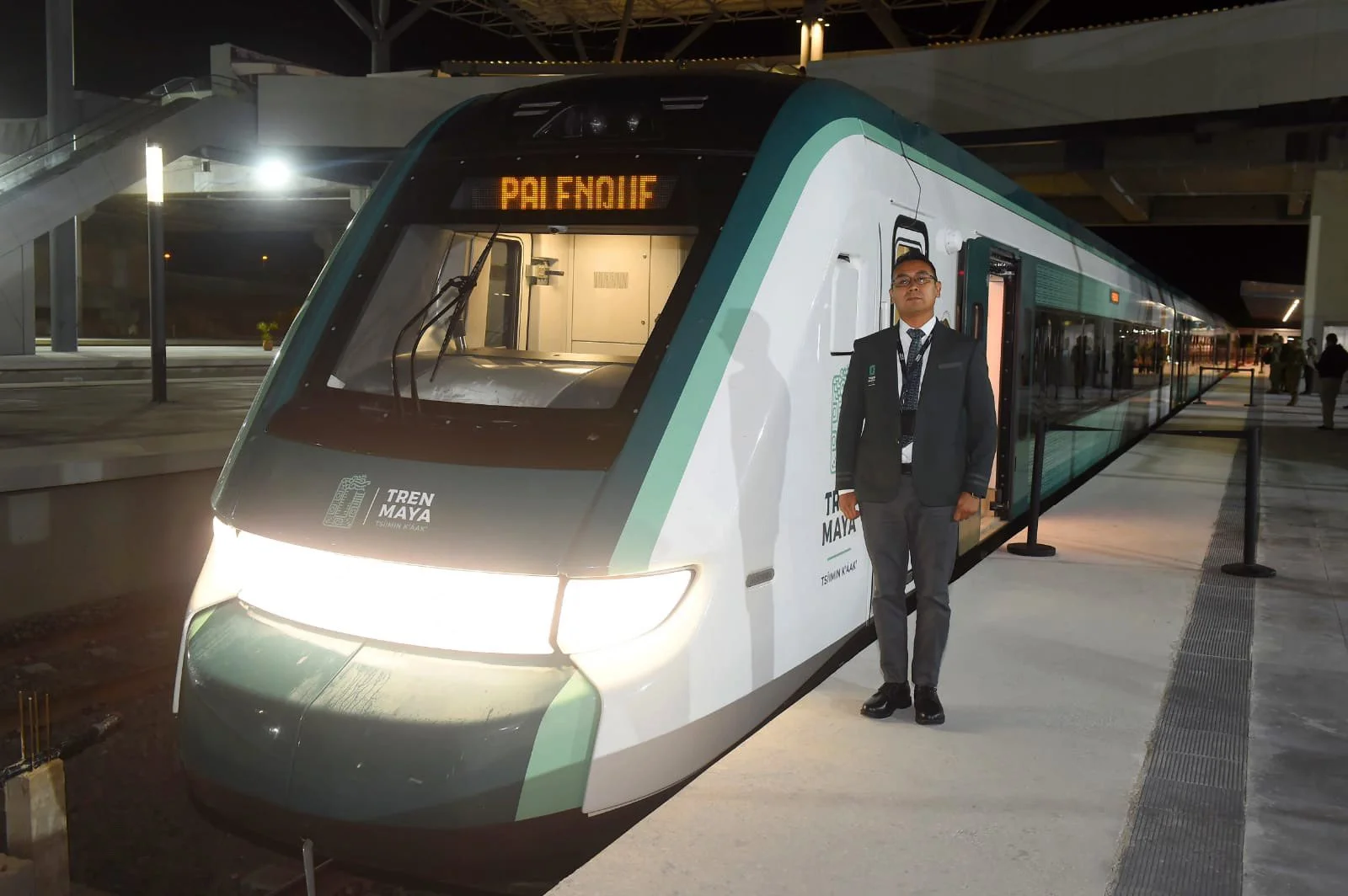
Frequently Asked Questions about the Mayan Train
1) What happens if my ticket doesn’t arrive in my email?
Simply show the payment receipt with the charge to your card and provide the reservation details, and the staff to help you print your tickets.
2) Can I bring bicycles on the Mayan Train?
Yes, you can bring bicycles on the Mayan Train, but there’s a limit of four bicycles per train, not per carriage.
3) Can I board and disembark at any station/stop on the Mayan Train?
Yes, you can disembark from the Mayan Train before reaching your destination. However, you cannot re-board the train with the same ticket; you’ll need to purchase another ticket for the alternate destination.
4) Can alcoholic beverages be consumed on the Mayan Train?
Yes, alcoholic beverages are available for purchase on the Mayan Train, along with food options. However, please note that consuming outside alcoholic beverages is not permitted on board.
5) Can I bring pets on the Mayan Train?
Only small-breed pets are allowed to board, accompanied by their vaccination card or records. Support animals with proper documentation are also permitted, but they must be registered prior to boarding the Maya Train.
6) Is it safe to travel on the Mayan Train?
Of course, the Mayan Train has National Guard personnel on the trains. Additionally, the entire route is monitored by various corporations and units.
7) How often does the Mayan Train run?
For now, the Mayan Train operates on afixed schedule. It is expected that once all 42 trains are in service, the frequency will be every 30 minutes.
8) What does TSÍIMIN-K’ÁAK mean in the Mayan Train?
The name “TSÍIMIN” was bestowed upon the horse by the Mayan people due to its resemblance to the native Tapir (Tsíimin). Since the horse was an unknown species to the Mayans, comparing it to the Tapir allowed them to find a similarity and, therefore, a name to refer to it. “K’ÁAK” means fire, blaze, hearth, bonfire, so the Mayan Train is known as the Fire Horse.
9) How long does it take for the Maya Train to complete the entire route?
The Tren Maya covers its longest route in approximately 11 hours, traveling from Palenque, Chiapas, to Cancun International Airport.
The journey from Cancun Station to Chetumal Airport Station takes around 5 hours. Meanwhile, the route from Chetumal to Palenque takes approximately 8 hours.
By combining these segments, it is possible to complete nearly the entire railway circuit. However, there is currently no train that runs the full route continuously, so passengers must transfer between different sections.
10) What is the speed of the Maya Train?
The Tren Maya passenger service travels at a speed of 160 km/h, while the Tren Maya freight service operates along the route at 120 km/h.